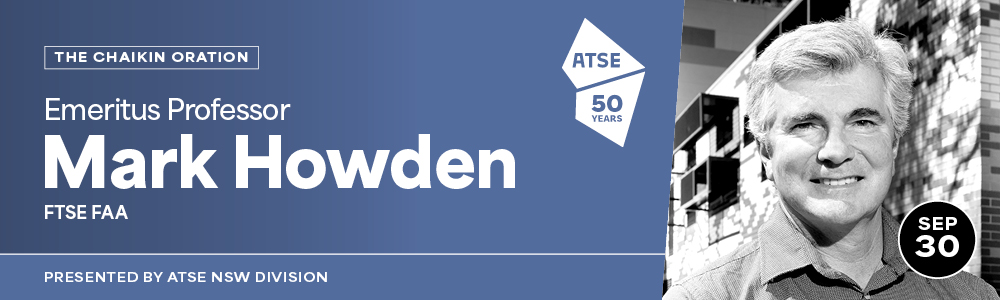
Chaikin Oration 2026
Climate change action or inaction? The choice is now clear.

In Australia, the political discourse on trajectories of greenhouse gas emissions is increasingly unsettled with political parties' position now ranging from a substantial reduction in emissions by 2035 to removal of the previously bipartisan net-zero by 2050 goal. This is just one example of how the public discourse on climate change is becoming increasingly divorced from both the evidence-base and the lived reality of people in Australia and across our region and globally, with countries in Europe and North America currently suffering record high temperatures and disastrous wildfires.
Much of the media and political attention remains focused on the costs of transitioning from fossil fuel-based electricity supplies towards renewables, largely missing the many benefits of an effective energy transition and ignoring that this sector is only about 30% of our emissions profile (and hence largely omits the opportunities from other sources).
Similarly, there is media coverage of the growing cost of individual climate extreme events, but the dots are often not joined to give an overall picture of the escalating damage bill nor are the substantial benefits of adaptation options covered. Similarly, the intersection of climate change extreme events with other disruptors is only just starting to emerge in arenas such as Reserve Bank deliberations. This lack of an overview is arguably hampering rational debate as to our desired overall trajectory and, in the process, costing us and future generations dearly.
This presentation will address the overall costs and benefits of climate action versus inaction, what the national interest demands of us and how technological sciences and engineering can help define and find solutions for the challenges.

Online via Zoom 12:45pm - 2:00pm

Diversity and Inclusion
Reconciliation Action Plan Equity, diversity and inclusion policy Diversity & Inclusion ToolkitConnect


Australian Academy of Technological Sciences & Engineering
Level 2, 28 National Circuit Forrest ACT 2603
+61 2 6185 3240 | info@atse.org.au
ABN 58 008 520 394 — ATSE is registered with the Australian Charities and Not-for-profits Commission,
and is a Deductible Gift Recipient (DGR).